Life Before and After the EMBA: Dickie Soriano on Leveling Up at 52
When Dickie Soriano considered pursuing an Executive MBA in his early fifties, the question from friends and colleagues was simple: Why now? After all, he had already built an award-winning marketing agency, taught at Ateneo de Manila University, and contributed to multiple nonprofits. Yet something in him felt unfinished, a sense that there was still more to learn, more to contribute, and more to explore beyond familiar ground.
Today, Dickie serves as the Chief Marketing Officer of USSC, the largest independent Western Union agent in the Philippines, while also teaching, leading a foundation in Davao, and sitting on several industry boards. His reflections offer a candid, thoughtful look at how the UCLA-NUS EMBA shaped both his worldview and his work.

Screen grab of televised event with Philippine President Ferdinand Marcos Jr on the launch of the electronic benefits transfer system for the Department of Agriculture.
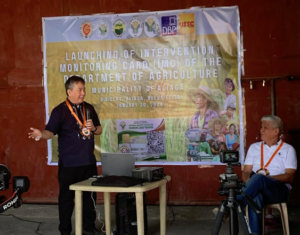
Dickie Soriano speaking at the launch of the first ever electronic benefit transfer program for rice farmers in the Philippines. The system uses digital vouchers and electronic cash transfers to cut corruption and bring aid directly to rice farmers.
A Life of Many Hats
“My name is Dickie Soriano. I am Filipino, an entrepreneur, a CMO, a part-time professor, and someone who has always been deeply involved in nonprofit work.”
Dickie founded BCD Pinpoint in 1988, building it into a respected marketing communications agency. Today, alongside running his own business, he holds a senior corporate role in one of the Philippines’ most trusted remittance institutions. He also serves as program director for the Tuason Development Foundation and contributes to several other organizations.
It is a rich and meaningful life which makes his next story even more amazing.
Why Choose an EMBA? (Or: The Sports Car He Never Bought)
“For me, the real question is why I decided to pursue an EMBA at all rather than buy a nice two-seater sports car,” Dickie laughs. “My wife forcibly encouraged me to take the EMBA instead.”
He entered the program during what he jokingly calls a midlife crisis. At that point, he felt he had accomplished most of what he set out to do: build a successful agency, teach, and engage in social impact work.
“But I needed something that would give me world-class learning without forcing me to abandon my responsibilities,” he explains. “The UCLA-NUS EMBA met that need better than anything else.”
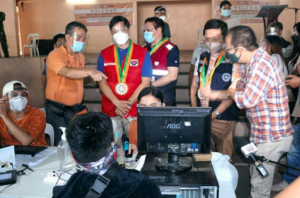
With the Department of Social Welfare and Development Rolando Jose Bautista at the height of the COVID pandemic in the Philippines. Using its expertise in money movement, USSC CMO Dickie Soriano helped develop a safe and secure system for distributing cash aid to families.
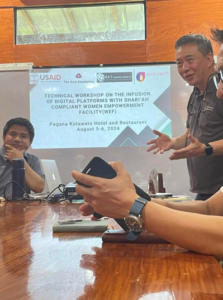
Leading a USAID-funded workshop to develop a Shari’ah compliant digital financing platform to help women ex-combatants start their own businesses in Mindanao, Philippines.
Why an MBA Matters in the Philippine Context
By the time Dickie enrolled, he was a 52-year-old established entrepreneur, decorated with advertising awards. Many believed he had nothing left to prove.
“People wondered why I would waste time and money on further education,” he recalls.
Initially, Dickie believed he mainly needed to learn better time management. Looking back, that seems naïve. The EMBA did not merely help him manage his existing load, it prepared him to take on much more.
After graduating, he found himself:
- running his agency
- taking on the role of CMO for a company handling USD 3 Billion in remittances
- becoming CEO of a Canada-based remittance company
- participating in multiple M and A efforts and serving on several boards
“I now view my life in two parts: before the EMBA and after,” he says. “Before, I thought I could only do so much. After, I realized I could do much more.”
Lessons That Became Real-World Lifelines
One of Dickie’s most vivid stories reflects the surprising relevance of the curriculum.
“In Prof. Luh Luh Lan’s Corporate Governance class, I remember thinking it was fascinating but almost inapplicable to the Philippines,” he shares. “And then I was pulled into crisis communications for a very public shareholder dispute rooted in governance issues.”
Suddenly, the terms he had studied such as duty of care, fiduciary duty and conflict of interest became essential tools. That textbook became his constant companion, and the group he supported ultimately prevailed.
Other courses continue to influence him as well.
“I had never thought of myself as a good negotiator,” he says. “I even did badly in Prof. Chris Erickson’s negotiations class. But the lessons stuck. They guide my work every day.”

Our class beer specially concocted and brewed by classmate Brian Wollak
The Power of a Diverse Cohort (and a Good Beer)
“Beer is the best study aid ever invented,” Dickie says with a grin.
From sharing local brews across countries to debating ideas with classmates from India, Germany, the United States, and Singapore, he describes the cohort experience as one of the program’s greatest gifts.
“Studying with people from different industries and cultures makes you realize that a world market truly exists,” he notes. “Points of view different from your own enrich your thinking. And yes, Indian engineers, German lawyers, and American bond traders can be fun company.”

Taking part in Holi during the India Segment
The Format That Made It All Possible
Before choosing the program, Dickie spent significant time researching formats that would fit his demanding schedule.
“The combination of face-to-face classes, company visits, and online submissions turned out to be ideal,” he says. “It let me stay fully present in both my work and my studies.”
There were moments when the deadlines felt overwhelming, but the months ultimately passed faster than expected.
“One of my classmates had a countdown calendar to the last day,” he recalls. “It felt slow then, but graduation arrived sooner than we thought.”
A Message for Filipino Professionals
The Philippines often prides itself on exporting talent rather than exporting products and services. Dickie believes this mindset needs to change.
“To become a better country, we need to build human capital not just for overseas labor but for creating offerings that can compete internationally,” he argues.
Programs like the UCLA-NUS EMBA help accelerate that vision.
“It opens doors through world-class faculty, talented classmates, and an active alumni network,” Dickie says. “It shows individuals, companies, and even countries that they can do more than they ever imagined.”
For Dickie Soriano, the UCLA-NUS EMBA was more than formal education. It marked the beginning of a new chapter filled with greater responsibility, deeper perspective, and a renewed sense of possibility. His journey shows that it is never too late to expand one’s horizons, embrace new challenges, and pursue learning that reshapes how you lead.
Connect with the admissions team today!
Click here to learn more about the UCLA-NUS EMBA program and why it is the program designed for global leaders.
Alternatively, click here to schedule a 1 on 1 zoom call with our admissions staff.