From Physician to Policy Leader: How an EMBA Supports Healthcare Leadership Transitions
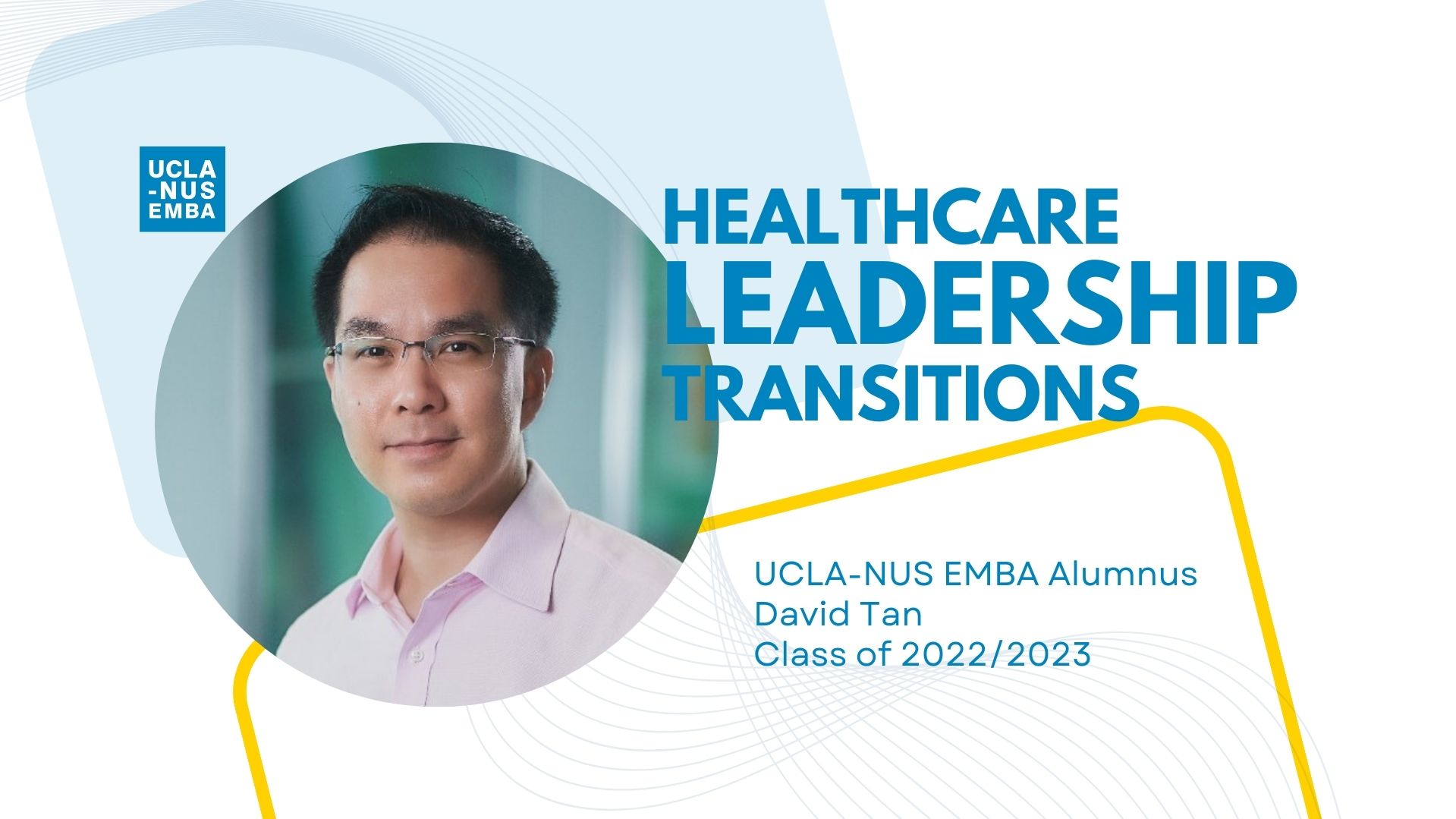
By David Tan
Healthcare leaders today face challenges that extend far beyond clinical expertise. As healthcare systems grow more complex, doctors increasingly take on leadership roles that require skills in management, finance, negotiation, and policy. From family physician to health policy leadership, Dr. David highlights how an Executive MBA (EMBA) can support that transition.
Expanding Beyond Clinical Practice Into Healthcare Leadership
I trained as a family physician and spent most of my career in Singapore’s public healthcare system. My most recent role was Director of Clinical Services within the polyclinics, where I oversaw clinical programs and service delivery across a cluster.
More recently, I was seconded to the Ministry of Health (MOH), where I now oversee primary and community care. This includes responsibility for polyclinics, the GP sector, and community-based healthcare services across Singapore. The role is broader, more strategic, and more policy-oriented than my previous positions.
This shift into healthcare policy and system-level leadership was a significant step outside my comfort zone—one I felt better prepared for because of my EMBA experience.
Why Doctors Consider an EMBA
Like many physicians, I had completed extensive postgraduate medical training, including a fellowship with the College of Family Physicians Singapore. Clinically, I felt well-equipped. However, as I moved into senior leadership and administrative roles, I recognized gaps in my non-clinical skill set.
Healthcare leaders must understand financial decision-making, organizational strategy, and stakeholder management. These are not typically covered in medical training. An EMBA provides structured learning in these areas, equipping doctors with business and leadership skills that complement clinical expertise.
Practical EMBA Skills for Healthcare Management
Several EMBA modules had immediate relevance to my work. Formal training in finance helped me better understand budgeting, resource allocation, and the financial implications of healthcare decisions. Negotiation training was especially valuable, particularly in managing stakeholder relationships and working toward collaborative, win-win outcomes.
The management practicum was one of the most demanding parts of the program. It required teamwork, primary research, interviews, and rigorous analysis. While challenging at the time, it closely mirrored the types of projects I now manage in both healthcare operations and policymaking.
Building Confidence to Move Into Policy Roles
Beyond technical knowledge, the EMBA helped build confidence. Watching classmates transition into new leadership roles, often during or immediately after the program, demonstrated that career change is possible, even later in one’s professional journey.
My move into the Ministry of Health and in policymaking required that confidence. The EMBA provided not just new skills but also a leadership mindset that encouraged strategic thinking and adaptability.
EMBA Advice for Doctors and Clinician Leaders
For doctors considering their next career step, especially those moving toward healthcare management or policy, an EMBA is worth careful consideration. Clinicians often reach a point where they are asked to take on leadership or administrative roles without having received formal management training.
An EMBA offers exposure beyond healthcare, allowing physicians to learn alongside executives from other industries. This cross-sector perspective helps healthcare leaders better understand how organizations make strategic and financial decisions.
That said, an EMBA is demanding. It requires significant time commitment and effort. Support from family, employers, and supervisors is essential. Open discussions with reporting officers and HR teams about flexibility and workload can make the program far more manageable.
The Value of Global EMBA Education
When selecting an EMBA program, I prioritized global exposure. I wanted an international business education that extended beyond Singapore and Asia. Learning in a global classroom environment—alongside participants from different regions and industries—broadened my perspective on leadership, innovation, and systems thinking.
The international component of the program also strengthened professional networks. Discussions with healthcare professionals overseas, including comparisons of how different systems responded to COVID-19, enriched the learning experience and deepened my understanding of global healthcare challenges.
Preparing for the Future of Healthcare Leadership
An EMBA can be a powerful tool for doctors seeking to expand their impact beyond clinical practice. It develops business acumen, strengthens leadership capability, and provides a broader perspective on healthcare systems and policy.
For me, the program helped bridge the gap between medicine, management, and policymaking—preparing me for leadership roles that require both clinical insight and strategic thinking.
As healthcare continues to evolve, leaders who can navigate both clinical and business realities will be increasingly important. An EMBA is one way to build that capability and prepare for the next stage of a healthcare leadership career.
Over time, people grew more confident, more adaptable, and more open.
We studied intensely, but we also spent time exploring cities and enjoying each other’s company. Those friendships continue today. Our cohort stays connected through WhatsApp, celebrates birthdays together, and meets whenever someone travels to a new country.
The larger alumni network, both UCLA and NUS, has also been incredibly supportive. You can ask a question and receive sincere, thoughtful replies from people around the world. It feels like a genuine community.
How did the program support your career pivot?
The EMBA gave me confidence to move from technology to business leadership and then into financial consulting. While studying, I was also building our startup, so I applied lessons immediately. The program strengthened my decision making, negotiation skills, and cross cultural communication.
One memorable lesson came from an economics class, where we learned the importance of recognizing when a product will never become economical. That mindset helped my team later when post-pandemic costs made our product unviable. We paused the project instead of forcing it forward, saving significant time and resources.
Overall, the program made me more adaptable and better prepared to operate in a global environment.
What advice would you give to prospective students?
If you want to scale your leadership globally, the UCLA-NUS Executive MBA gives you the exposure, confidence, and experience to do it. You do not just learn international business. You live it.
You sit with classmates from many countries, face real multicultural challenges, and grow in ways that are both personal and professional. In today’s world, adaptability is essential, and this program helps you build exactly that.
Connect with the admissions team today!
Click here to learn more about the UCLA-NUS EMBA program and why it is the program designed for global leaders.
Alternatively, click here to schedule a 1-on-1 Zoom call with our admissions staff.